2025 has already witnessed significant global changes, including heightened geopolitical instability, the accelerating impact of artificial intelligence, and ongoing shifts in the labor market. Economic factors such as new US tariffs are reshaping the trade landscape. Meanwhile, while progress has been made in the energy transition, gender disparities persist. With divergent policies and economic performances around the world, and shifting geopolitical situations, the global economy is at a turning point. Recent forum studies, through expert interviews, have explored in depth the key factors influencing contemporary society. These factors include the divergence in economic and political landscape, the rapid transformation brought about by artificial intelligence, and the demands of fairness and sustainable development.
Global Situation
In 2025, the "ChatGPT phenomenon" and artificial intelligence will develop rapidly. Nvidia and Microsoft will both surpass a market capitalization of $4 trillion, setting historical records. Investors believe that Microsoft's investments in data centers and OpenAI have yielded results. It is predicted that by 2030, data centers will account for more than 3% of global energy consumption, a significant increase from 1% in 2022. However, a research report published by the World Economic Forum, "The Artificial Intelligence Energy Paradox: Balancing Challenges and Opportunities," shows that artificial intelligence technology has the potential to help companies achieve up to 60% energy efficiency optimization, thereby achieving a dynamic balance between energy supply and demand.
By 2025, the technology sector had already cut thousands of jobs. While layoffs are often linked to AI, the reality is not a simple replacement. Large companies are implementing large-scale layoffs partly to fund AI research and development, not entirely due to AI replacing human labor. Although AI may eliminate some basic jobs, it has spawned emerging professions such as AI engineers, prompt word experts, and data scientists. The recent implementation of return-to-work policies faces even greater challenges; surveys show that only 40% of employees accept a five-day work week, a 12 percentage point decrease from the beginning of last year. Opposition is particularly strong among women and families with children, who consider flexible working hours a fundamental right that cannot be compromised.
The Federal Reserve's interest rate cuts have multi-dimensional impacts
The Federal Reserve's three interest rate cuts this year, totaling 75 basis points, have triggered a restructuring of global capital flows, having multi-dimensional impacts on personal consumption, corporate financing, and asset allocation.
The Federal Reserve's monetary policy, through interest rate changes and balance sheet adjustments, has a broad impact on the global economy, financial flows, and asset prices. The Fed's three rate cuts in 2025 exacerbated the divergence in global monetary policies; simultaneously, declining yields on dollar-denominated assets reduced the dollar's attractiveness, prompting international capital to shift from the US to high-growth regions such as emerging markets.
A weaker dollar directly reduces cross-border consumption costs. For example, Chinese consumers reduced spending on overseas education, travel, and online shopping, while lower prices for imported goods benefited consumers. At the corporate level, import companies saw increased short-term profits due to lower RMB-denominated procurement costs, while dollar-denominated debt companies benefited from lower financing costs and reduced debt interest payments. However, dollar-denominated export companies may face weakened international competitiveness due to rising commodity prices, and raw material importers also face increased cost pressures from rising commodity prices.
Currently, the US faces both stagflation and stock market bubble risks. If the Fed aggressively cuts interest rates due to political pressure, it could exacerbate overheating in technology stocks or inflationary pressures; furthermore, damage to the Fed's independence could undermine the dollar's credibility and accelerate the diversification of the monetary system. Furthermore, the global risk management system needs to adapt to fluctuations in capital flows and policy uncertainties to prevent the massive impact of rapid inflows and outflows of hot money on emerging markets.
It is worth noting that market expectations for further interest rate cuts by the Federal Reserve next year have further supported the rise in prices of gold and other precious metals. Goldman Sachs analysts stated in a research report that continued gold purchases by central banks, coupled with inflows of private investor funds into gold ETFs under the backdrop of continued easing by the Federal Reserve, are expected to push gold prices to $4,900 per ounce by the end of 2026.

Global Turning Points
The AI Revolution is Accelerating
In the "Industries in the Intelligent Age" forum series, artificial intelligence is transitioning from conceptual promotion to comprehensive transformation. Its influence has permeated various fields such as operations, content, supply chain, and sales. Taking the consumer industry as an example, AI-driven processes are expected to reduce content production costs by 60% while increasing conversion rates by up to 20%.
The Global Labor Market is in Turmoil
According to the "Future of Jobs 2025" report, AI is reshaping the workplace landscape along with multiple transformative forces. Driven by the green economy and climate change, approximately 50% of companies have adjusted their recruitment strategies, leading to a significant surge in demand for sustainable development and technical positions, while traditional office and administrative roles are shrinking.
Skills shortages are prompting companies to prioritize employee training, and the gender and age employment gaps remain to be bridged, with lifelong learning becoming increasingly mainstream.
Surveys show that over 80% of business owners believe that artificial intelligence and data technology will revolutionize their fields. It is projected that by 2030, generative AI will create 170 million new jobs while simultaneously replacing 92 million traditional jobs with machines.
Trump's Tariffs Reshape the Global Trade Landscape
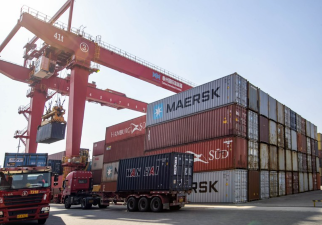
According to the World Economic Forum's May "Chief Economist Outlook," the global economic situation has continued to decline since the beginning of this year. Rising trade protectionism and volatile tariff policies have increased uncertainty, impacting long-term planning.
Global economic growth may fall to 2.3% by 2025, primarily due to increased trade barriers and a lack of policy stability. A study conducted earlier this year by the World Economic Forum and Oliver Wyman suggests that a breakdown in the global financial system could result in economic losses ranging from $0.6 trillion to $5.7 trillion. This trend of financial fragmentation is becoming increasingly apparent.
Accelerated Energy Transition, but Risks May Hinder Progress
According to the latest Energy Transition Index (ETI), the world has achieved its fastest progress in energy transition in nearly a decade. However, the report also points out that many countries lack a solid foundation for sustained progress. While investments in clean energy have reached $2 trillion, these funds are primarily concentrated in developed countries and China, with other regions lagging significantly.
Despite progress in energy access, cost control, and emissions management, preparedness for future crises remains weak. Extreme weather and infrastructure pressures, especially the surge in AI-driven energy demand, pose significant challenges to achieving the net-zero target.
Gender Gap Persists – Particularly in Technology, AI, and Healthcare
Despite global efforts, achieving gender equality by 2025 remains a significant challenge. According to the Global Gender Gap Report, the current global gender equality index is only 68.8%, and at the current rate of progress, it would take up to 123 years to completely eliminate the gap. Among many countries, only Iceland has surpassed the 90% gender equality mark. Notably, in rapidly developing fields such as artificial intelligence and healthcare, women's participation in senior management positions and cutting-edge technologies is significantly low, a situation that urgently needs improvement.
While significant progress has been made in education and health, women's participation in economic activities remains insufficient. Particularly in STEM (science, technology, engineering, and mathematics) fields and management positions, the proportion of women is significantly lower than that of men. Effective measures must be taken to eliminate these long-standing barriers in order to promote inclusive development in key industries.
According to LinkedIn's US platform, women outnumber men in positions affected by generative AI (57% vs. 43%); however, in positions benefiting from generative AI, the number of male employees is higher (54% vs. 46%).
Conclusion
The path forward is clearly laid out before us—a massive explosion in productivity, a slow shakeout, a major restructuring, or Japanization—each scenario has its logic and possibilities. However, the greatest danger is not choosing which path to take, but rather the lack of awareness and courage to choose. In this era of imbalance, the real risk is not the crisis itself, but our hesitation and complacency in the face of it.
The key to the future of the global economy lies in the hands of those countries and enterprises capable of confronting structural contradictions and driving substantive reforms.